May 31th, Open House , Undergraduate, Graduate, PhD, Register Today May 31th, Open House Undergraduate, Graduate, PhD Register Today The Bar-Ilan Impact Article Open Day: Friday, May 31, 9:00-13:00 BIU is hosting an Open Day for future students to tour the campus, explore faculties and departments, and receive all the needed information before 2024-25 registration 01.02.2024 | כב שבט Article Opmed.ai Raises $15M Opmed.ai, an AI optimization platform for healthcare that started with BIU’s Unbox Venture, founded by Dr. Mor Brokman Meltzer and Prof. Baruch Barzel, both of Bar-Ilan University, has successfully raised $15M in Series A funding 07.05.2024 | כט ניסן Article New Multilingual Programs Amid Global Antisemitism BIU launches five new multilingual undergraduate programs and one graduate degree for international students 05.03.2024 | כה אדר Research New Technology to Determine the Best Tailored Cancer Treatment New technology, developed at Bar-Ilan University and funded by the Israel Cancer Association, will assist medical professionals in determining the best course of tailored cancer treatment 06.05.2024 | כח ניסן Article Special Admission Track for Reservists Open House on Friday, March 8 03.03.2024 | כג אדר For more research For more research For more articles For more articles Study in Israel Bar-Ilan's International School Impact Beyond Excellence: undergraduate, graduate, and advanced studies taught fully in English in the heart of Israel Short-Term & Exchange Programs A Unique Opportunity to Study in Israel Undergraduate Studies at Bar-Ilan University Open to candidates from all over the world, Bar-Ilan offers a selection of undergraduate programs taught fully in English Graduate Programs at Bar-Ilan University From Classical Studies to Brain Science to Biblical Studies Exceptional Students, Extraordinary Impact Exceptional Students, Extraordinary Impact Student Meet Hadas Lupa Meet Hadas Lupa, who’s pursuing an MSc degree in electrical engineering, in the electro-optics track, at BIU’s Alexander Kofkin Faculty of Engineering. 11.02.2020 | טז שבט Alumni Meet Orlando Marin Marin made a novel scientific breakthrough while pursuing his doctorate in Physics and Chemistry at Bar-Ilan’s Institute for Nanotechnology and Advanced Materials (BINA). 20.08.2020 | ל אב Student Meet Omri Cohen A third-year student at Bar-Ilan University’s Azrieli Faculty of Medicine and President of the Medical Student Association of the Galilee. 21.01.2020 | כד טבת Alumni Meet Hanan Abu Hassan Meet Hanan Abu Hassan, 23, from the town of Tarshiha in Israel’s north, who is completing her MSc degree in Biotechnology at Bar-Ilan University’s Goodman Faculty of Life Sciences. 06.07.2020 | יד תמוז Events 08 May Physical event Conference 2024 Ackerman Family Center Conference Exploring the Latest Research and Insights in Corporate Governance No cost | Open to wide audience 08.05.2024 Wednesday 09:00 - 18:00 No cost | Open to wide audience Save to calendar Google iCal Yahoo! Outlook.com 16 May Physical event Conference Google Tools for AI and Data Science Research Workshop Introducing practical tools for researchers from various academic disciplines No cost | Open to wide audience 16.05.2024 Thursday 09:45 - 13:45 No cost | Open to wide audience Save to calendar Google iCal Yahoo! Outlook.com 31 May Physical event Conference Open Day on BIU Campus Visit our campus, meet department staff, and get all the info about our programs, all with a cool vibe & music. No cost | Open to wide audience 31.05.2024 Friday 09:00 - 13:00 No cost | Open to wide audience Save to calendar Google iCal Yahoo! Outlook.com 02 June Physical event Conference History, Prophecy, Art The 2024 International Creative Writing Conference, in memory of Founding Director Shaindy Rudoff, z’’l No cost | Open to wide audience 02.06.2024 - 04.06.2024 No cost | Open to wide audience Save to calendar Google iCal Yahoo! Outlook.com 02 June Physical event Conference Israel Data Science and AI Initiative 3rd Annual Conference Join us for a Unique Deep Learning experience on the edge of a cliff overlooking the Mediterranean NIS | Open to wide audience 02.06.2024 - 04.06.2024 NIS | Open to wide audience Save to calendar Google iCal Yahoo! Outlook.com View all events Currents From Darkness to Dialogue .How one classroom rose above October 7. Shira Tamir's experience of Ben Mollov's Jewish-Arab Inter-Religious Dialogue course Read More Read More Why do So Many on the Left Side With Hamas? Watch this enlightening talk by Prof. Jonathan Rynhold, head of the department of Political Studies at BIU Beyond Humanitarian Aid Israel must take action to regain international legitimacy and address the humanitarian crisis in Gaza Read More Read More Integrating Values into Israel’s National Security Strategy Navigating the Complexities of Value Promotion in a Dynamic Reality of an Ongoing Conflict Read More Read More All Highlights All Highlights
08 May Physical event Conference 2024 Ackerman Family Center Conference Exploring the Latest Research and Insights in Corporate Governance No cost | Open to wide audience 08.05.2024 Wednesday 09:00 - 18:00 No cost | Open to wide audience Save to calendar Google iCal Yahoo! Outlook.com
16 May Physical event Conference Google Tools for AI and Data Science Research Workshop Introducing practical tools for researchers from various academic disciplines No cost | Open to wide audience 16.05.2024 Thursday 09:45 - 13:45 No cost | Open to wide audience Save to calendar Google iCal Yahoo! Outlook.com
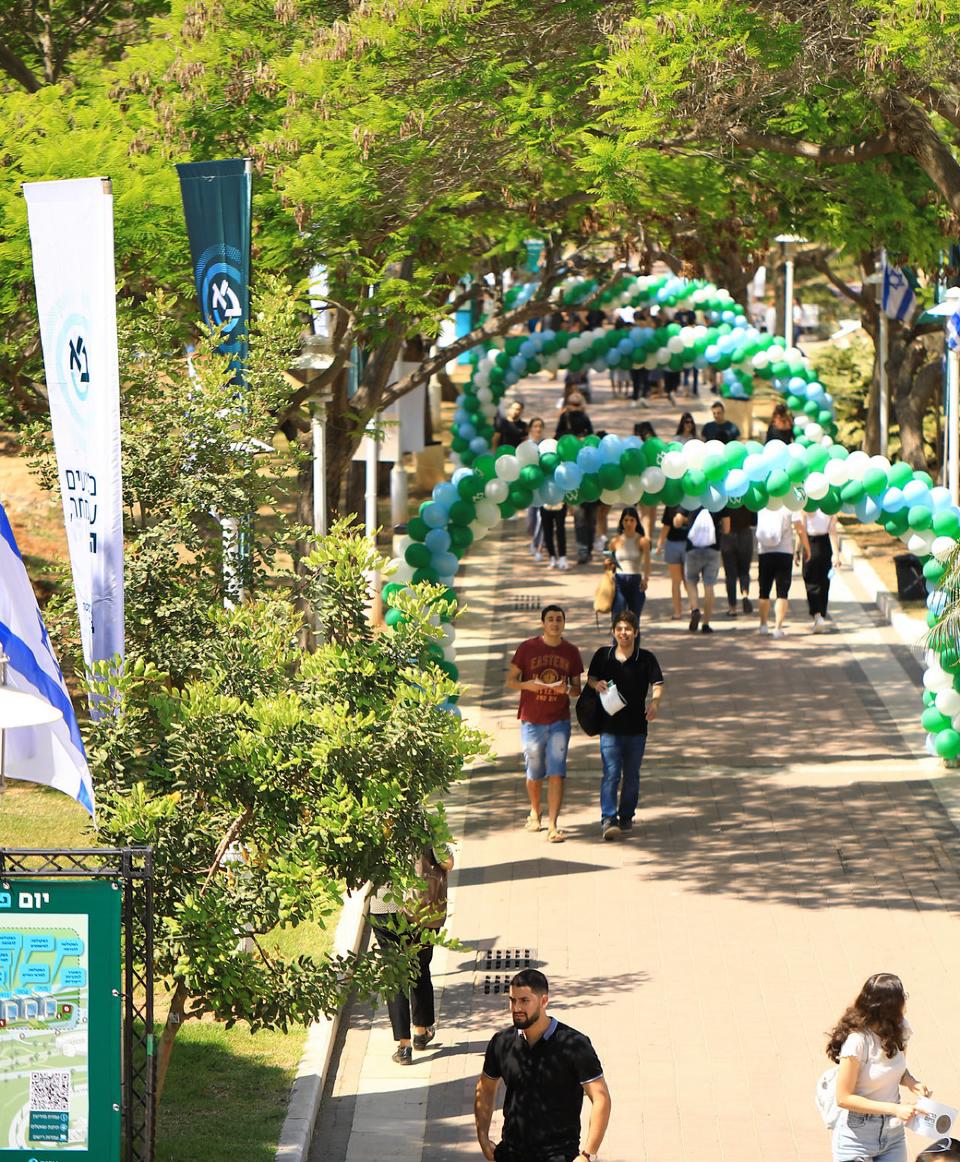
31 May Physical event Conference Open Day on BIU Campus Visit our campus, meet department staff, and get all the info about our programs, all with a cool vibe & music. No cost | Open to wide audience 31.05.2024 Friday 09:00 - 13:00 No cost | Open to wide audience Save to calendar Google iCal Yahoo! Outlook.com
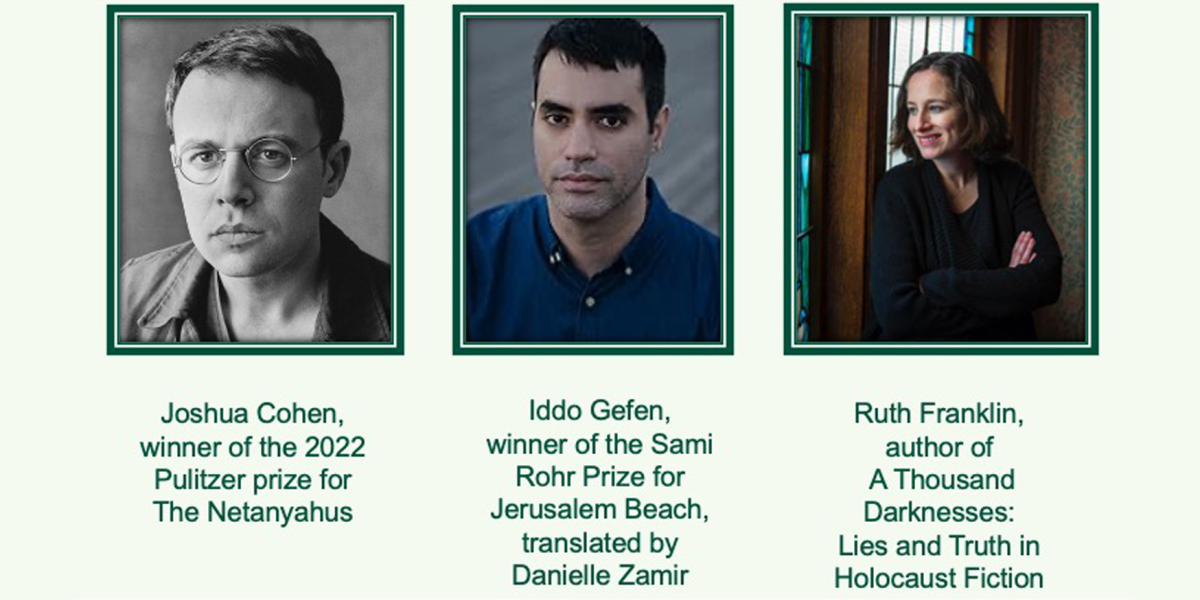
02 June Physical event Conference History, Prophecy, Art The 2024 International Creative Writing Conference, in memory of Founding Director Shaindy Rudoff, z’’l No cost | Open to wide audience 02.06.2024 - 04.06.2024 No cost | Open to wide audience Save to calendar Google iCal Yahoo! Outlook.com
02 June Physical event Conference Israel Data Science and AI Initiative 3rd Annual Conference Join us for a Unique Deep Learning experience on the edge of a cliff overlooking the Mediterranean NIS | Open to wide audience 02.06.2024 - 04.06.2024 NIS | Open to wide audience Save to calendar Google iCal Yahoo! Outlook.com